


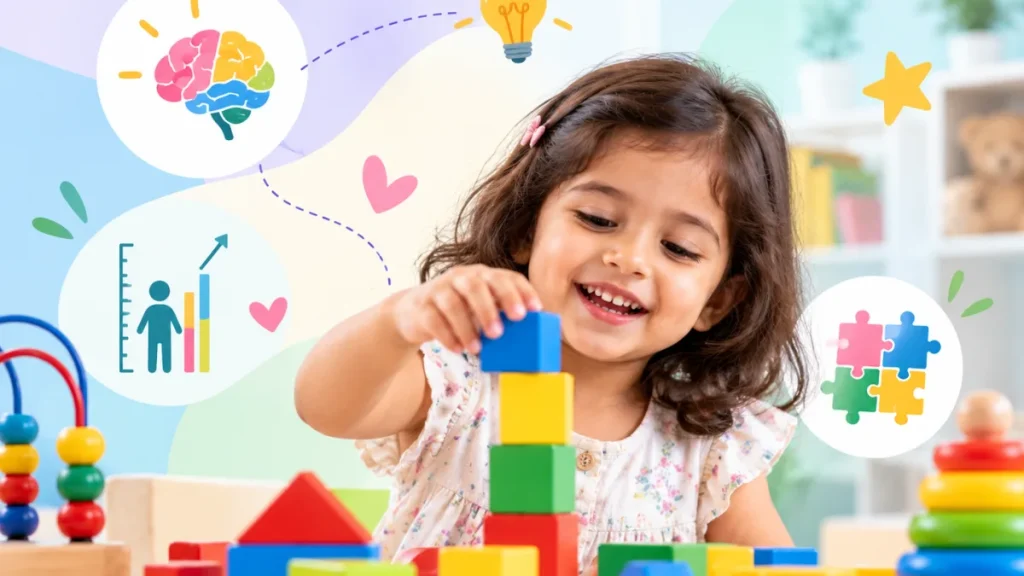
About growth and development care at Genesiss
In short: We plot height, weight and head size on WHO and IAP charts, screen movement, speech and social skills at every age, and arrange early support — such as speech therapy — when a child needs it.
Our pediatrician measures your child’s height, weight and head size and plots them on WHO and IAP growth charts, so a change in growth pattern is spotted early. We review movement, speech, understanding, play and social skills at each age using standard developmental screening, and look for nutritional causes such as iron or vitamin deficiency. When a child needs extra help we arrange early intervention — such as speech or occupational therapy — or a specialist referral.
Milestones from 1 to 5 years
Most children reach these skills by the age shown. A small delay in one area isn’t always a worry, but it’s worth checking.
| Age | Movement | Hands & play | Speech | Social |
|---|---|---|---|---|
| 12 months | Pulls to stand, cruises | Pincer grasp, bangs toys | 1–2 words, says “mama/papa” | Waves bye-bye |
| 18 months | Walks alone | Scribbles, stacks 2–3 blocks | Several single words | Points to show you things |
| 2 years | Runs, kicks a ball | Stacks 5–6 blocks | Two-word phrases (“more milk”) | Plays alongside other children |
| 3 years | Climbs stairs, pedals a tricycle | Copies a circle | Short sentences most people understand | Takes turns, pretend play |
| 4 years | Hops on one foot | Draws a person with a few parts | Tells simple stories | Plays cooperatively |
| 5 years | Skips | Writes some letters | Speaks clearly in full sentences | Follows rules in games |
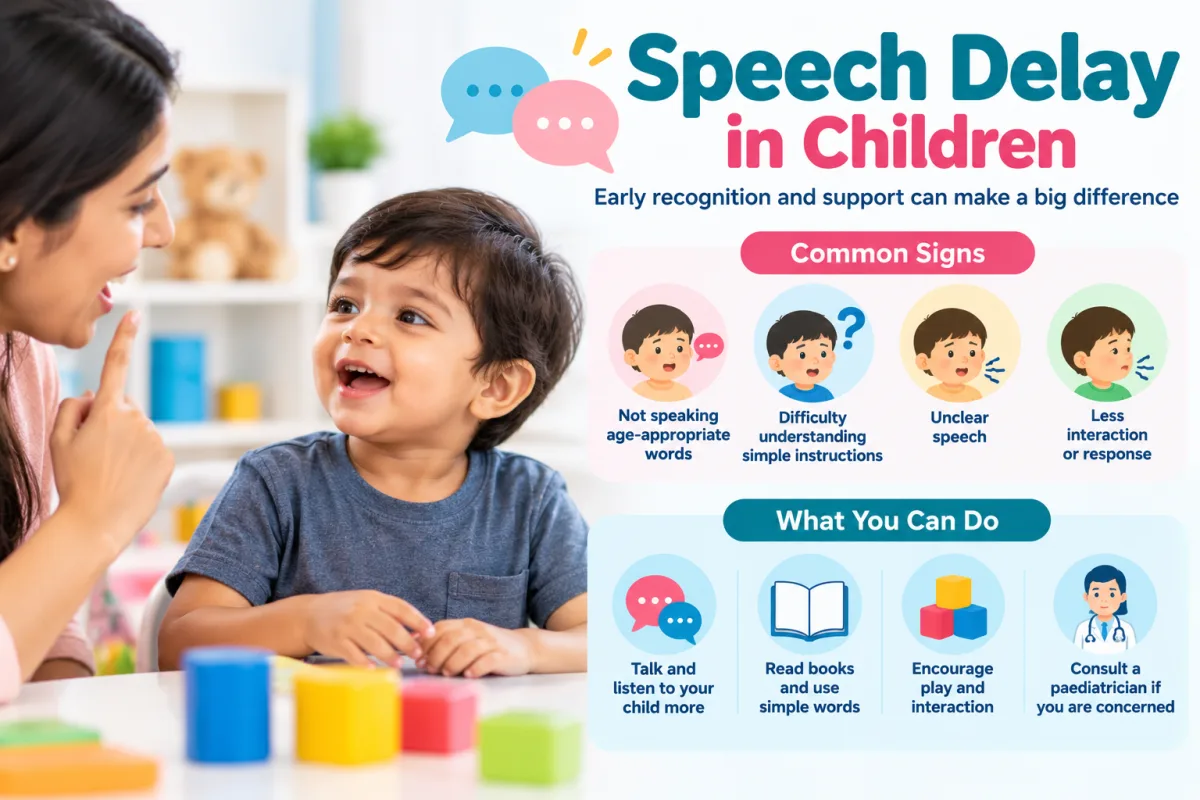
Red flags — book a development check
| Age | See a pediatrician if your child… |
|---|---|
| By 4 months | Doesn’t smile at you or follow your face |
| By 9 months | Can’t sit without support, or doesn’t babble |
| By 12–16 months | Doesn’t point, wave or say any words |
| By 18 months | Isn’t walking |
| By 2 years | Doesn’t use two-word phrases |
| Any age | Loses skills they already had, or doesn’t respond to their name |
What We Offer
- Growth monitoringHeight, weight, head circumference and BMI tracked over time.
- Developmental screeningMotor, speech, cognitive and social milestones for age.
- Nutrition assessmentChecks for anaemia, vitamin D deficiency, underweight and obesity.
- Early intervention planningReferral to speech, occupational or developmental therapy when needed.
- Parent guidancePlay-based activities, screen-time limits and routines that support development.
When to bring your child
Ask for a development check if your child:
- isn’t smiling by 3 months, sitting by 9 months, or walking by 18 months
- has no single words by 16 months or no two-word phrases by 2 years
- loses skills they already had
- doesn’t respond to their name or make eye contact
- is much shorter or lighter than other children the same age, or has stopped growing
How parents can help at home
- Talk and read every day — name things, describe what you’re doing, share picture books.
- Play on the floor — tummy time for babies, building blocks, puzzles and outdoor play for toddlers.
- Limit screens — none under 2 years except video calls; under an hour a day of good content for ages 2–5.
- Keep routines — regular sleep and meal times support attention and behaviour.
Frequently Asked Questions
What milestones should I watch for?
Social smile by 2 months, head control by 4 months, sitting by 6–8 months, standing with support by 9–10 months, walking and first words by 12–15 months. A delay in one area isn’t always a concern, but it’s worth checking.
My child is shorter than classmates. Should I worry?
Height depends a lot on parents’ height. What matters most is whether your child is growing steadily along their own curve. We’ll review their growth chart and test only if needed.
My child isn’t talking yet. When should I seek help?
If there are no words by 16 months, or no two-word phrases by 2 years, see a pediatrician. Early speech therapy makes a big difference.
How often should growth be checked?
Every 3–6 months in early childhood and at least once a year after age 5.
Does speaking two languages at home delay speech?
No. Bilingual children may mix languages or start a little later, but they reach milestones in their combined vocabulary. If you’re worried, we’ll check.
This page is for general information and doesn’t replace a consultation with a doctor. See our medical disclaimer.