

In short: Start solids at around 6 months, while continuing breastfeeding. Begin with smooth, iron-rich foods such as ragi porridge, mashed dal-rice and vegetable purees, one new food every few days. No salt, sugar or honey before 1 year, and no cow’s milk as a main drink until 12 months.
When is my baby ready?
Most babies are ready at about 6 months. Look for these signs:
- sits with support and holds the head steady
- shows interest in food and opens the mouth when food comes near
- can move food to the back of the mouth and swallow, rather than pushing it out
Starting earlier than 4 months isn’t recommended. If your baby was born early, ask your pediatrician when to start.
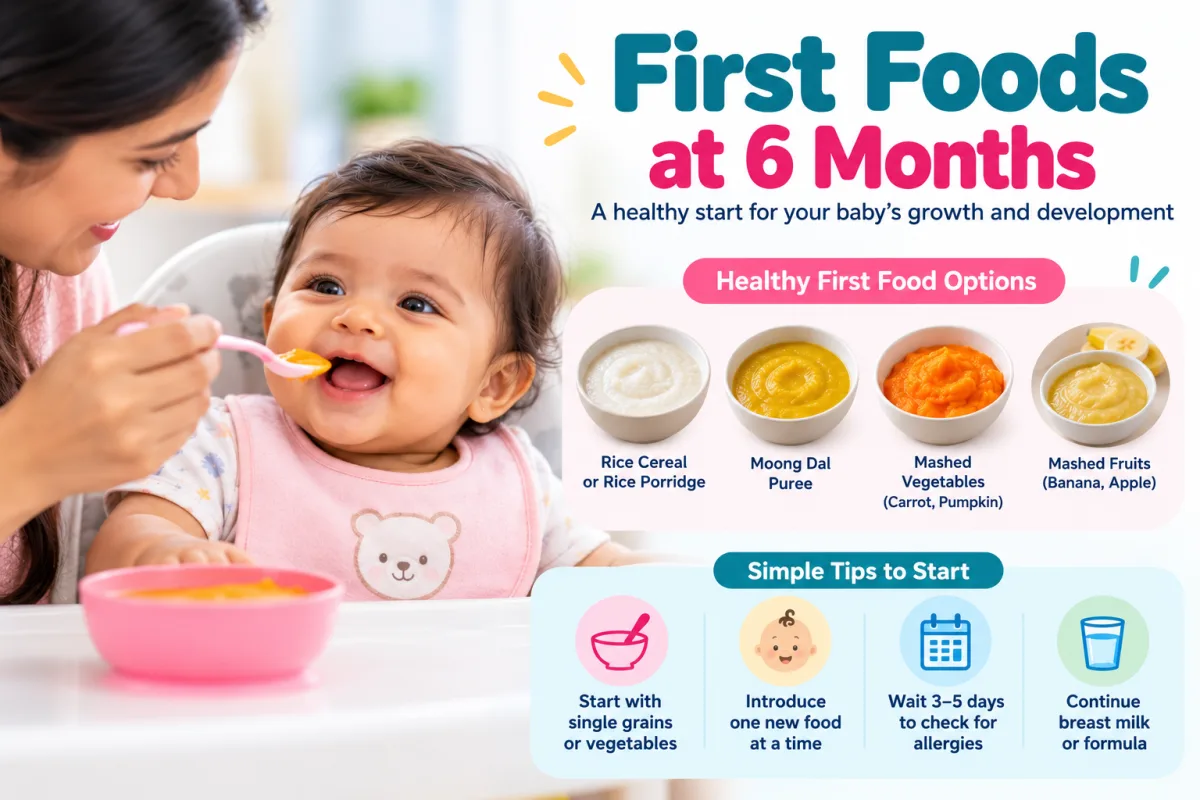
Good first foods
Start with one or two teaspoons once a day, then gradually increase.
- Ragi (finger millet) porridge — rich in calcium and iron, a Karnataka favourite
- Rice and moong dal khichdi, mashed smooth with a little ghee
- Vegetable purees — carrot, pumpkin, sweet potato, bottle gourd
- Fruit — mashed banana, steamed apple or pear, ripe papaya
- Iron-rich foods — dal, mashed egg yolk (if your family eats eggs), and later finely minced meat or fish
Introduce one new food every 2–3 days so you can spot any reaction. Common allergens like egg and peanut (as a smooth paste, never whole nuts) can be introduced at this age — ask your pediatrician first if your baby has severe eczema or a known allergy.
How much and how often?
| Age | Meals a day | Texture |
|---|---|---|
| 6–8 months | 2–3 meals, a few spoons growing to half a small bowl | Smooth, then thick and mashed |
| 9–11 months | 3–4 meals + 1–2 snacks | Mashed, soft lumps, finger foods |
| 12 months | 3–4 meals + 1–2 snacks | Family food, chopped soft |
Breast milk (or formula) remains your baby’s main nutrition until around 12 months — offer it before or after meals as usual.
Foods to avoid before 1 year
- Salt and sugar — a baby’s kidneys can’t handle added salt; sugar builds a sweet tooth
- Honey — risk of infant botulism
- Cow’s or buffalo milk as a drink — small amounts in cooking are fine
- Tea, coffee, packaged juices and biscuits
- Choking hazards — whole nuts, whole grapes, popcorn, hard raw vegetables
Feeding tips
- Sit your baby upright and stay with them during meals.
- Let your baby touch and explore food — mess is part of learning.
- Watch for fullness: turning away, closing the mouth, pushing the spoon away. Don’t force-feed.
- Offer water in a cup with meals from 6 months.
- Wash hands and keep utensils clean; make fresh food rather than storing cooked food for long.
When to see a pediatrician
Book a visit if your baby gags or vomits with most foods, isn’t gaining weight, has a rash, swelling or vomiting after a new food, or still refuses all solids at 9 months. Read more about our child nutrition advice or book a visit.