

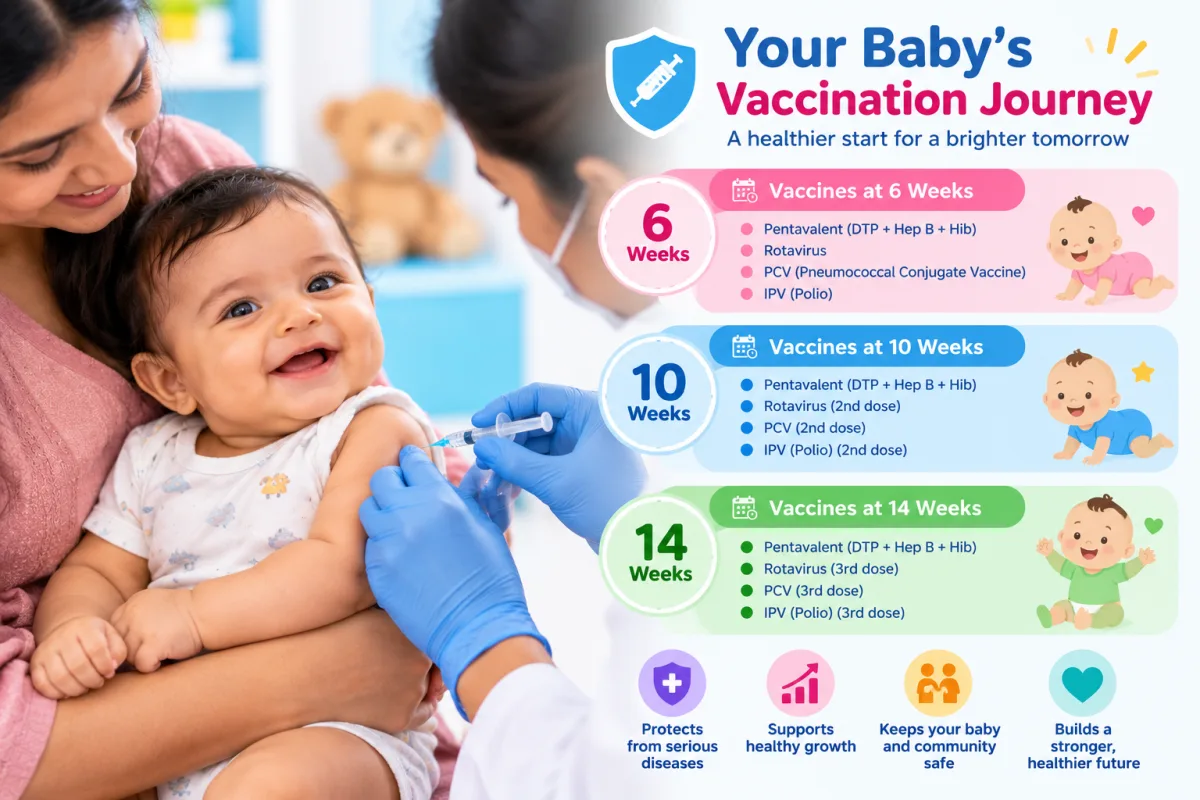
In short: At 6, 10 and 14 weeks your baby receives vaccines against diphtheria, tetanus, whooping cough, polio, Hib, hepatitis B, rotavirus and pneumococcal infection. Mild fever and fussiness for a day are common. Call a doctor for a fever above 40°C, crying that won’t settle for more than 3 hours, a fit, or any breathing difficulty.
Which vaccines are given?
The Indian Academy of Pediatrics (IAP) schedule groups several vaccines into these three visits, four weeks apart. Many are combined into one injection, so your baby usually gets two or three shots plus oral drops.
| Vaccine | Protects against |
|---|---|
| DTP (DTwP or DTaP) | Diphtheria, tetanus, whooping cough |
| IPV / OPV | Polio |
| Hib | Haemophilus influenzae type b (meningitis, pneumonia) |
| Hepatitis B | Hepatitis B liver infection |
| Rotavirus (oral drops) | Severe diarrhoea |
| PCV | Pneumococcal pneumonia, meningitis, ear infections |
Your pediatrician will explain the brands available, including combination vaccines that reduce the number of injections, and whether a whole-cell or acellular pertussis vaccine is recommended for your baby.
Before the visit
- Bring your baby’s vaccination card.
- Feed your baby as usual. Breastfeeding during or right after the injection is a great way to comfort them.
- Dress your baby in clothes that make the thighs easy to reach.
- A mild cold is not a reason to postpone. Tell the doctor if your baby has a high fever or has reacted to a previous vaccine.
What’s normal afterwards
For a day or two, your baby may have:
- a low-grade fever
- fussiness, extra sleepiness or a smaller appetite
- redness, swelling or a small lump where the injection was given
These are signs the immune system is responding. Cuddles and frequent feeds help. Give paracetamol only at the dose your pediatrician advises for your baby’s weight. Don’t rub, massage or apply anything to the injection site.
When to call a doctor
- Temperature of 40°C (104°F) or higher
- Inconsolable, high-pitched crying lasting more than 3 hours
- A seizure (fit), or your baby becomes floppy, pale or unresponsive
- Swelling of the face or lips, a widespread rash, or difficulty breathing
- Blood in the stool or repeated vomiting in the week after the rotavirus vaccine
Serious reactions are very rare. We ask families to wait at the hospital for a short time after vaccination so any immediate reaction can be treated straight away.
What if a dose was delayed?
Don’t worry — there’s no need to start again. Book a visit and your pediatrician will continue the schedule from where it stopped, keeping the right gap between doses.
Next due
After 14 weeks, the next vaccines are usually at 6 months (influenza, and others as advised), then 9 months (MMR). See the full overview on our child vaccination page, or book your baby’s vaccine visit.